Why have many metal meteorites gone missing? Tue 12 May 2026

Lucky guys. Source: T-34 via Does the Armor of a Tank get degraded
Although they're even luckier than the video clip suggests.
Why?
Because when a shell bounces off armour, it can spawn scabs:
And scabs turn tanks into blenders. Source: WORLD'S STRANGEST TANK SHELL | 76.2mm BR-350A | APHEBC Armour Piercing Simulation
Scabs are hot, fast, sharp and lethal.
So lethal that German artillery designers devoted a lot of resources to producing them:

And a lot of their alphabet. Source: after Does the Armor of a Tank get degraded
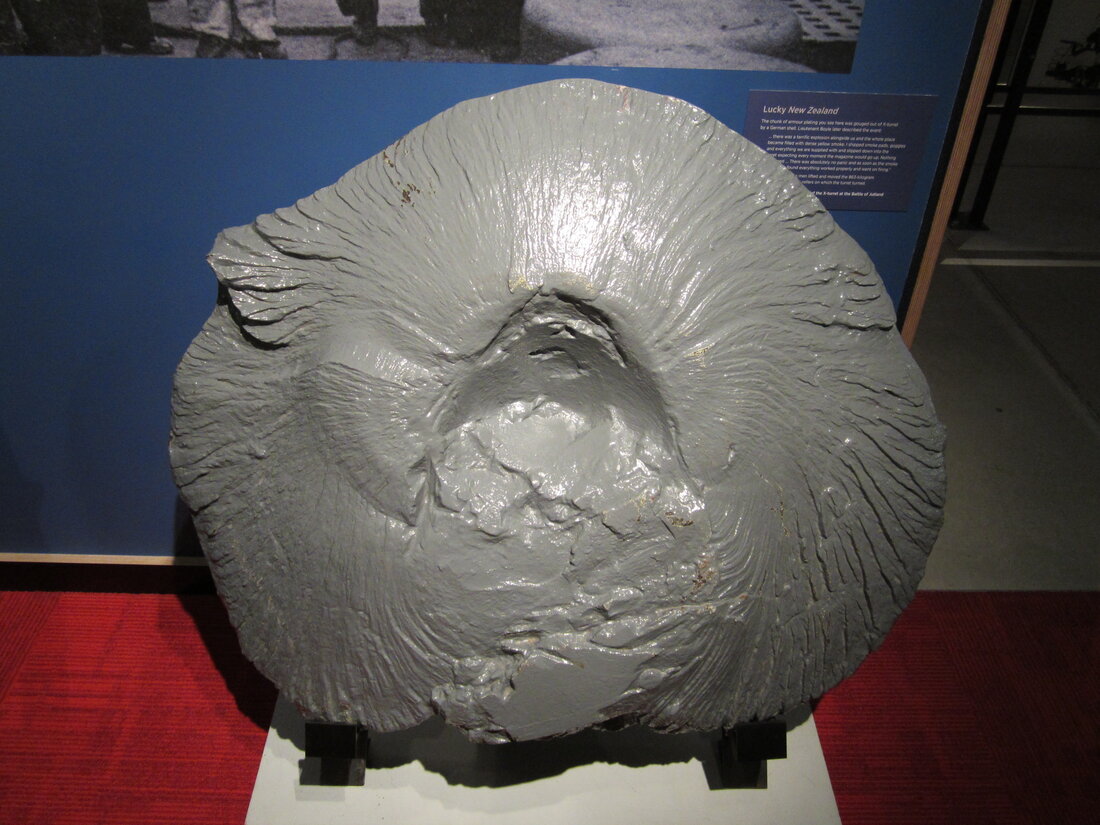
Scab from HMS New Zealand's armour plate. Source: Spall - Wikipedia
Viewed from the side, HMS New Zealand's scab is a flattish cone. It's thicker in the centre; feathering to a knife-like edge.
It shows us some very interesting things.
Rips radiate from its centre to its outer edge. The rotation of the impactor - a shell fired by German battlecruiser SMS Von der Tann - gave the rips their just visible curve.
The hit generated extreme heat at the scab's centre. The centre looks buttery-soft because heat softened the armour plate. The heat helped release the melted centre of the scab from the armour plate. The scab's outer edge was cooler, so it couldn't separate so easily. It was prised away from the armour by sheer impact and blast forces, with much less help from heat. That's why the rips are deeper close to the scab's edge.
Think of the scab's buttery centre as 'shock melting' caused by 'localised heat peak of short duration'. You'll thank yourself later. When the penny drops.
A simple diagram shows how an impact converts armour plate's tough metal alloy into a scab:
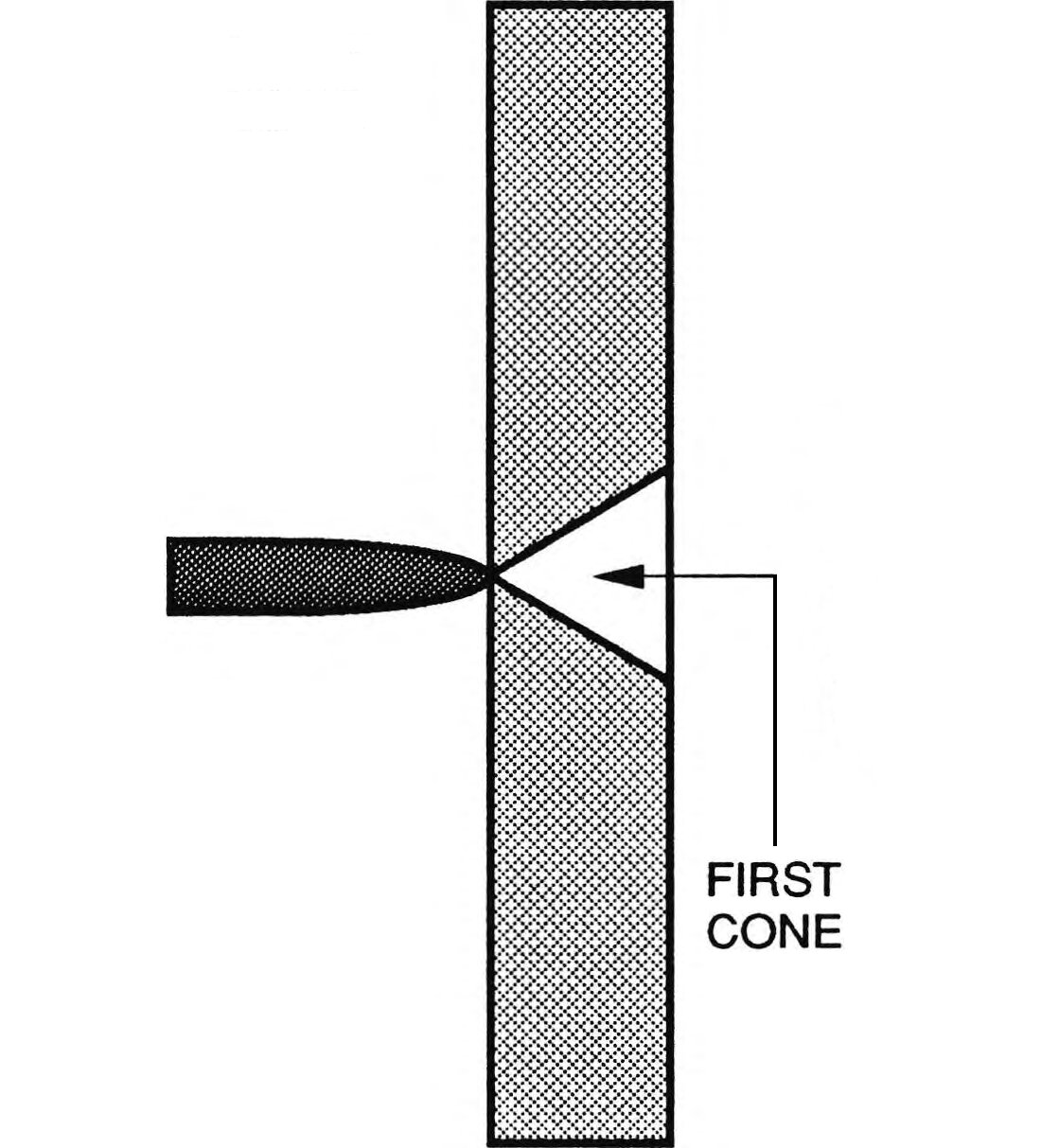
Projectile hits armour, heat and impact forces create cone-shaped scab. Source: after A Study of the Ballistic Performance of Lightweight Armours Against Small Arms Ammunition
Curiously, scabs have a lot in common with certain meteorites:
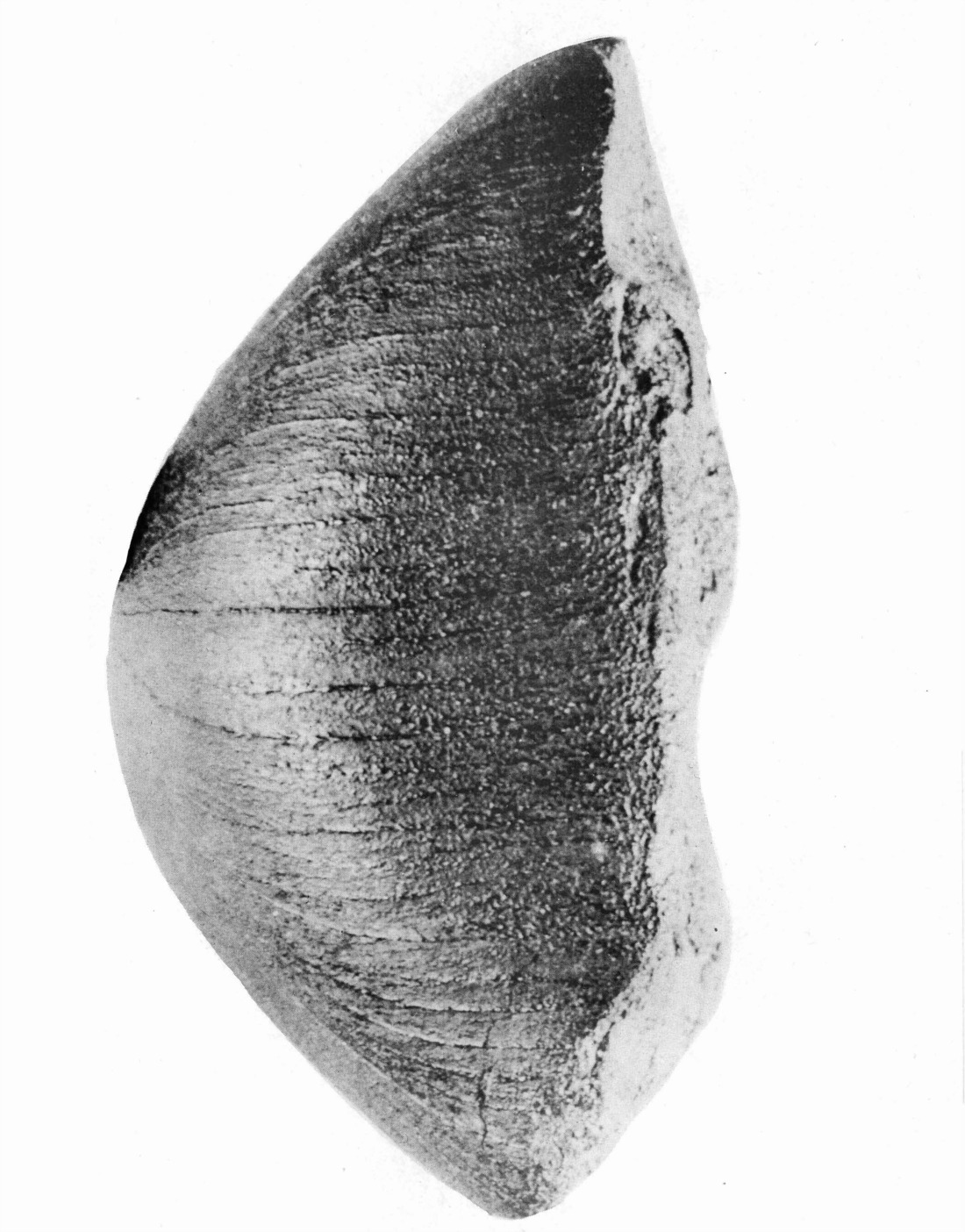
Lafayette Meteorite, Indiana. Source: Meteorites and Ballistics
In fact, scabs have a lot in common with many meteorites.
From Meteorites; their structure, composition, and terrestrial relations, Oliver Cummings Farrington, 1915, p60:
the cone-shaped or conoid is the most common and typical. The cone of such forms is usually low in proportion to its breadth
Put another way: meteorites are often shaped like flattish cones. Like HMS New Zealand's scab.
However, meteorite scientists don't blame artillery for shaping meteorites into flattish cones.
They blame air-resistance.
From Meteorites; their structure, composition, and terrestrial relations:
The forms of meteorites seem to depend chiefly on the amount of shaping which they undergo in their passage through the earth's atmosphere.
The form is evidently due to the greater exposure of the forward corners of the falling meteorite to the heat and friction of the atmosphere. These corners, as represented in the accompanying diagram (Fig. 17), are worn away more rapidly than interior portions.
Here is Fig 17:
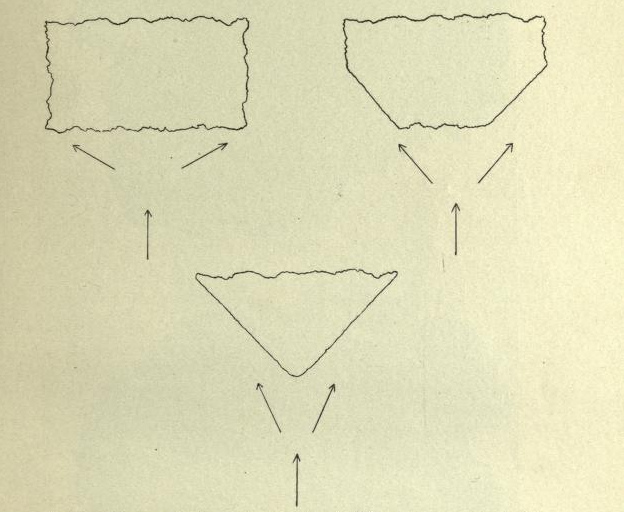
Obviously, this is a wind-up. Source: Meteorites; their structure, composition, and terrestrial relations
Fig 17 explains 10-ton nickel-iron alloy cones like Mexico's Morito meteorite:
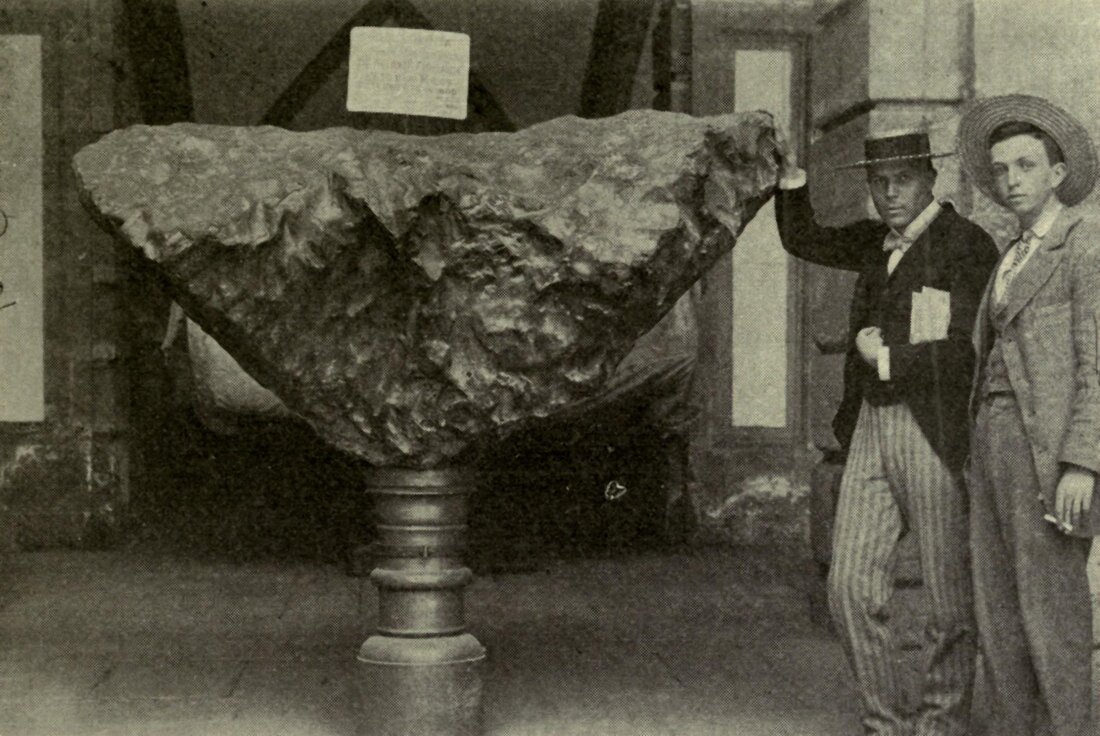
Allegedly. Source: Meteorites; their structure, composition, and terrestrial relations, Oliver Cummings Farrington, 1915, p57
Air resistance theory also explains why you shouldn't put your hand out of the window of a moving car. The wind will wear you hand away.
From the edges inward.
Allegedly.
Air resistance theory also tries to explain why the Lafayette meteorite has radial streaks similar to the radial rips you see on HMS New Zealand's scab.
And why other meteorites also have radial streaks.
Such as Wisconsin's Algoma meteorite.
From Meteorites; their structure, composition, and terrestrial relations, Farrington Oliver C., 1915, p69:
Its thickness varies from about one inch near the geometric center, to knife edges at several points.
a more remarkable feature is a complete series of radial furrows extending over the surface from the center outward. These are knife-like edges from one-fifth to one-tenth of a millimeter in width at the base, separated by furrows from one to two millimeters wide. The ridges are modified somewhat in their course by the structure... but in general pursue a rectilinear direction with a slight curve to the left.
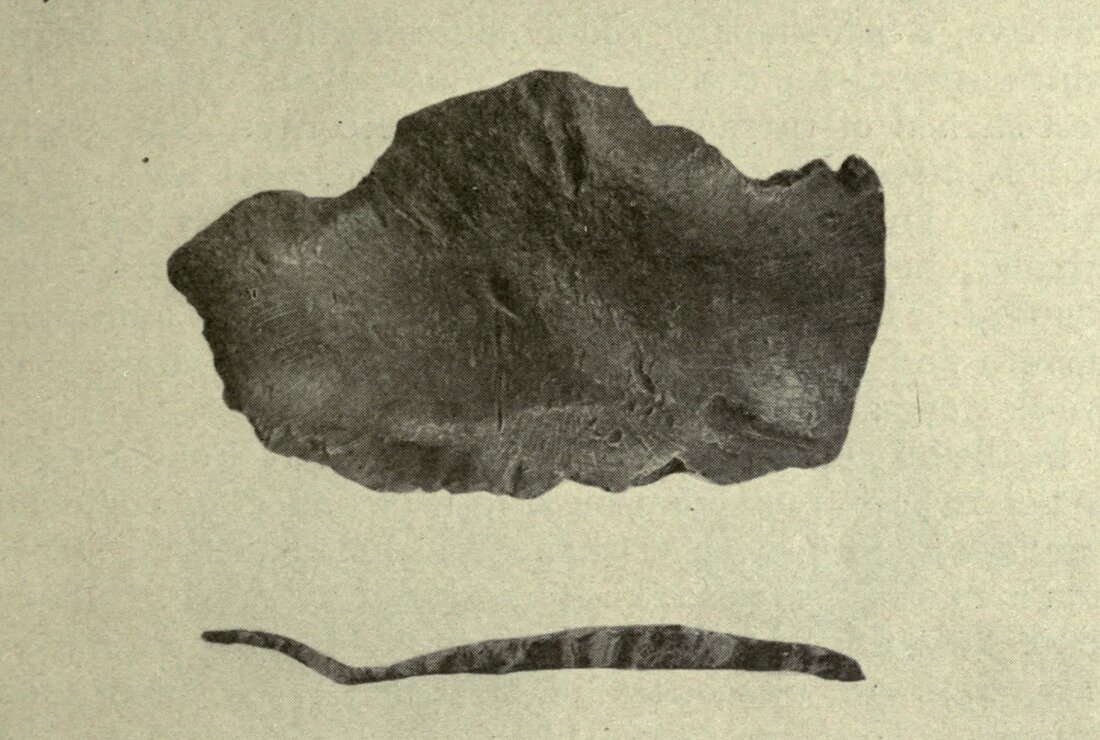
Sadly, it's more remarkable than photographable. Source: Meteorites; their structure, composition, and terrestrial relations, p69
Air resistance theory doesn't do a great job of explaining these features. Nor does it explain the bent bit on the left.
Although artillery theory does:
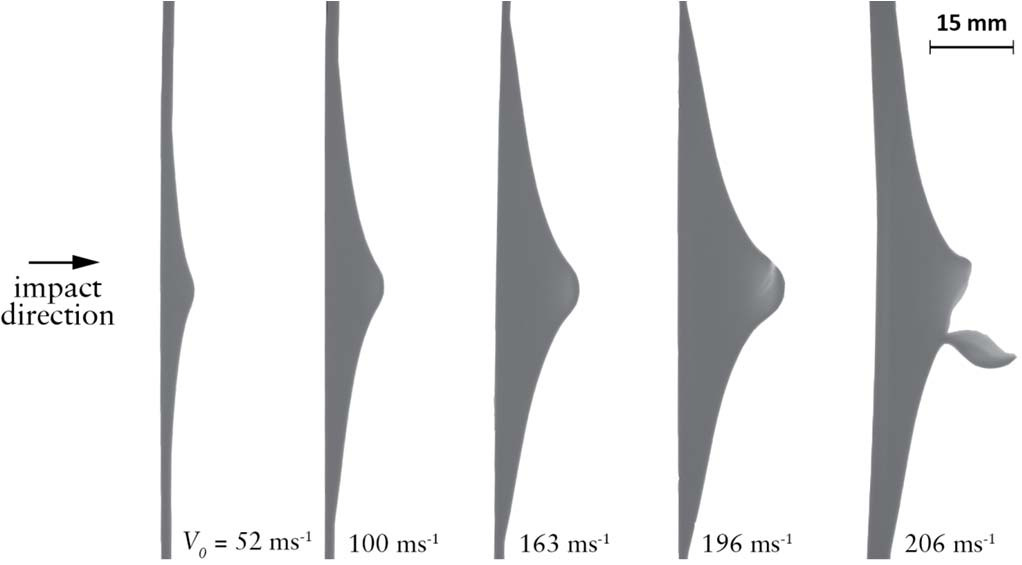
When rips can't quite pull it off. Source: The effect of shear strength on the ballistic response of laminated composite plates
Are there other holes in air-resistance theory?
Yes.
Another hole is that aerodynamics says that as melting metal meteorites ablate into cones, trailing streamers from their former 'forward corners' should create lips around their rear edges. The same aerodynamics that makes the rear of a car as dirty as its front.
So you should see traces of tendrils and lipping in photographs of the Morito, Lafayette and Algoma meteorites.
But you don't.
And there's another hole in air-resistance theory:
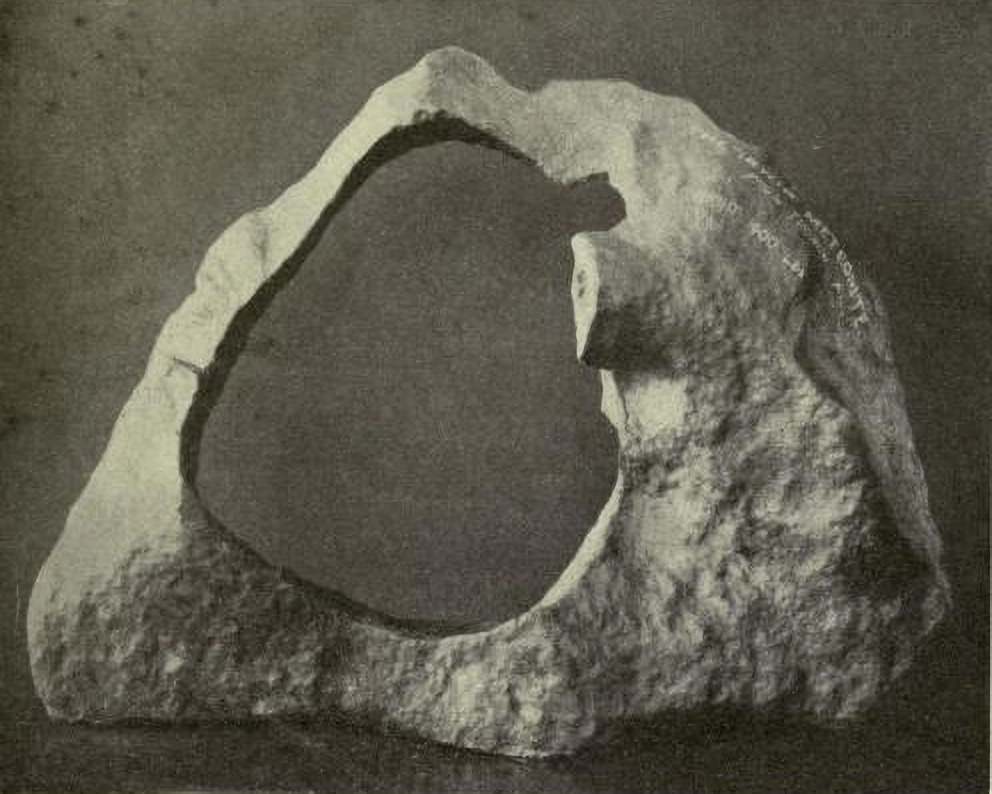
Oh God! He's brought out The Ring. Source: Meteorites; their structure, composition, and terrestrial relations, p75
For scale, this nickel-iron alloy ring-cone is 124 cm (49 in) wide, about 25 cm (10 in) deep, and despite being mostly air, it weighs about as much as six or seven adults.
At about 60 cm (2 ft) wide, the hole is big enough for most adults to squeeze through. The hole used to be longer until the ring was bent.
Curiously, this exotic nickel-iron alloy ring has more names than photographs. And just as curiously, its names become less descriptive over time. What was the Signet Iron, the Ring meteorite, and several other descriptive names, eventually became 'the Ainsa-Tucson Meteorite', then just 'the Tucson Meteorite'.
A name like 'the Tucson Meteorite' suggests it is a single item.
In reality, the Tucson Meteorite was one of two medium sized nickel-iron alloy chunks found among many larger nickel-iron alloy chunks.
They were found in 1735 (allegedly 1) on a hillside close to today's US-Mexican border:
Find-site area of the Tucson nickel-iron alloy masses
Key:
- Red area: Probable find area
- Blue marker: Likely find site
The other medium sized chunk also had its own name: the Carleton-Tucson Meteorite. It also had a shape that is familiar to some war veterans.
From The Carleton-Tucson and Ainsa-Tucson Meteorite Masses, MW Ritter von Haidinger, Sitzungsberichte der Kaiserlichen Akademie der Wissenschaften. Mathematisch-Naturwissenschaftliche Classe, Band 61, 1870, p507:
It possesses "a flat, bowl-shaped or shield-shaped form"
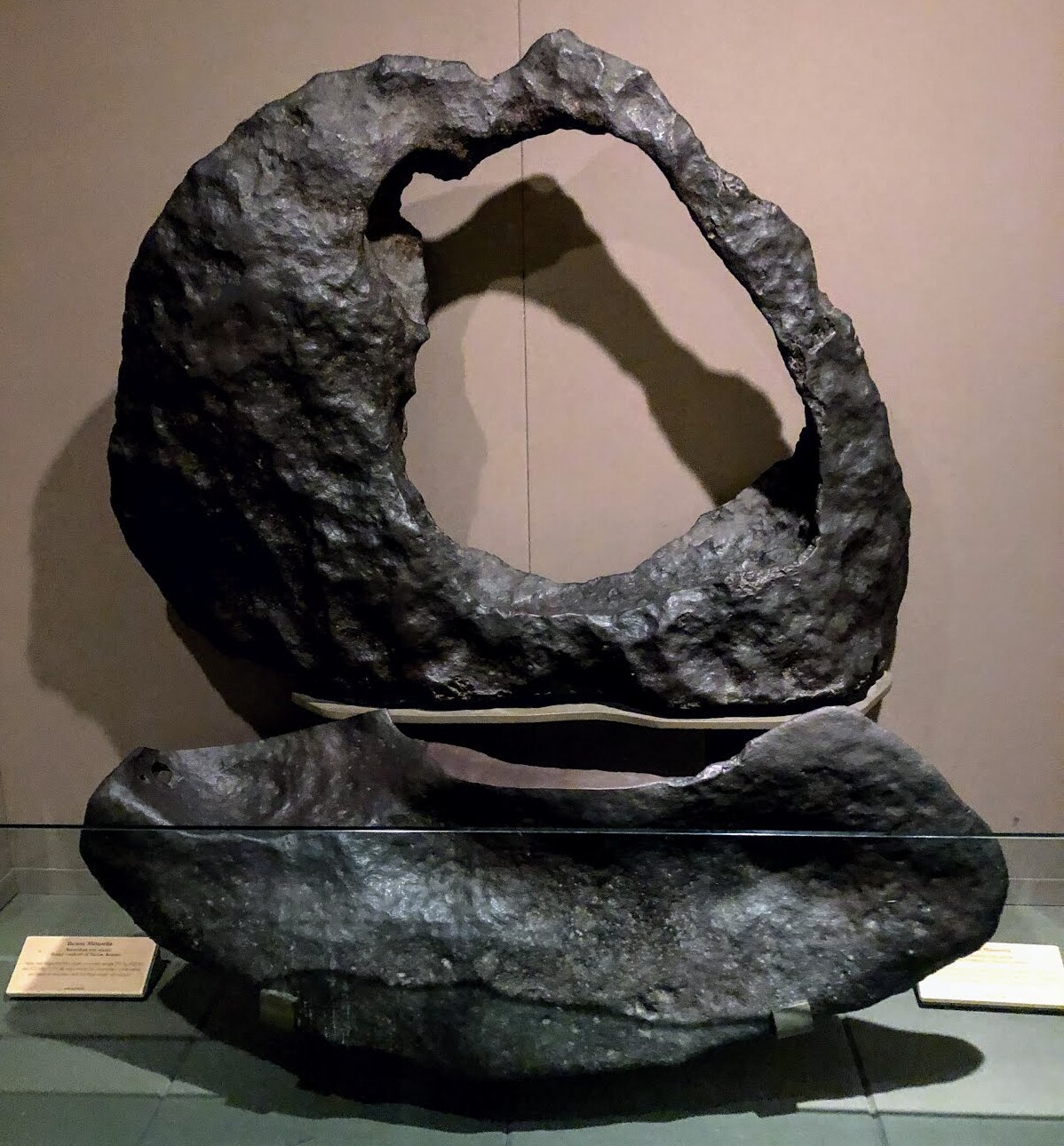
Ainsa-Tucson ring and Carleton-Tucson bowl at the Smithsonian Museum. Source: Tucson Ring Meteorite
It's easier to spot scientific deceits about 'iron' meteorites if you know that nickel-iron alloy is very, very tough. And if you know that the public was once very familiar with just how tough nickel-iron alloy really is.
For example, for some years the Tucson ring and the Tucson bowl/shield were planted in the centre of Tucson:
Tucson's meteorite sites circa 1860. Data Source: The Tucson Meteorites
Key:
- Blue marker: Tucson meteorites
Which may explain why neither of them are quite their original shape.
They were planted as public anvils:
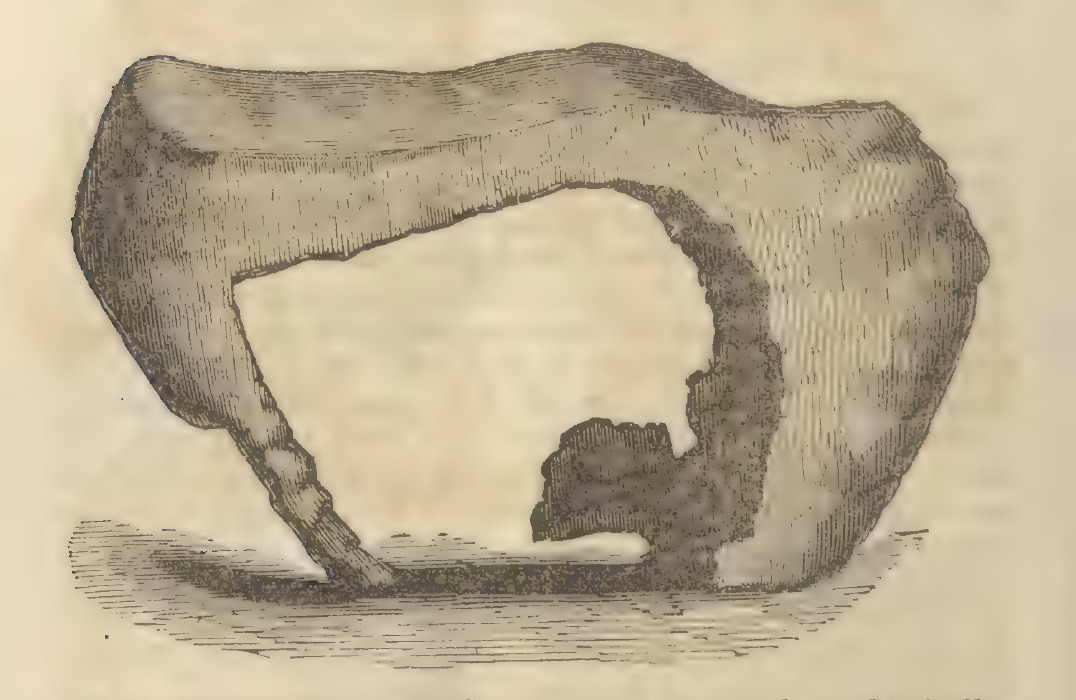
And also - probably - used as public beer bottle openers. Source: Memoir on Meteorites
Whatever, Tucson's public were once very familiar with them. They likely remembered the distinctive shapes of the Tucson anvils. And their distinctive hardness.
But in 1860 the Ainsa-Tucson anvil - the Ring - disappeared into closed institutions. It eventually wound up in the Smithsonian Museum. In 1862, the, Carleton-Tucson anvil followed.
And as laboratories began to pore over the two artefacts - especially the Carleton-Tucson artefact - meteorite experts began to spread strange stories among the public.
Austrian scientist WM Ritter von Haidinger stepped up first, explaining in 1870 how the Ainsa-Tucson meteorite came to be ring shaped. This he did by perverting both air-resistance theory and logic.
From The Carleton-Tucson and Ainsa-Tucson Meteorite Masses, MW Ritter von Haidinger, Sitzungsberichte der Kaiserlichen Akademie der Wissenschaften. Mathematisch-Naturwissenschaftliche Classe, Band 61, 1870, p509:
Obviously, the iron must have been drilled through, starting with a small hole that became ever wider. Until balance was achieved.
And on page 512, von Haidinger concluded:
The Ainsa-Tucson meteoric iron ring offers an example of an iron plate that has been drilled by air resistance.
Of course, a public familiar with manual labour, construction work and their now-missing beer bottle openers was likely to doubt Haidinger's theory of air-drillable nickel-iron alloy. So American meteorite expert Oliver Farrington took control of Haidinger's theory, steering it away from the ridiculous and toward the whimsical. By 1915, Farrington was proposing the Ainsa-Tucson Meteorite had previously contained a big stone that had fallen out.
Like a wedding ring that had lost its diamond.
And that is what today's public apparently believe. They believe meteorites are missing their stones. They also believe air resistance theory. Despite both theories being divorced from reality.
However, as with many divorces, it's the arrival of a third party that triggers the final break up; that converts ridiculous fictions into new facts.
That third party is the arms industry:
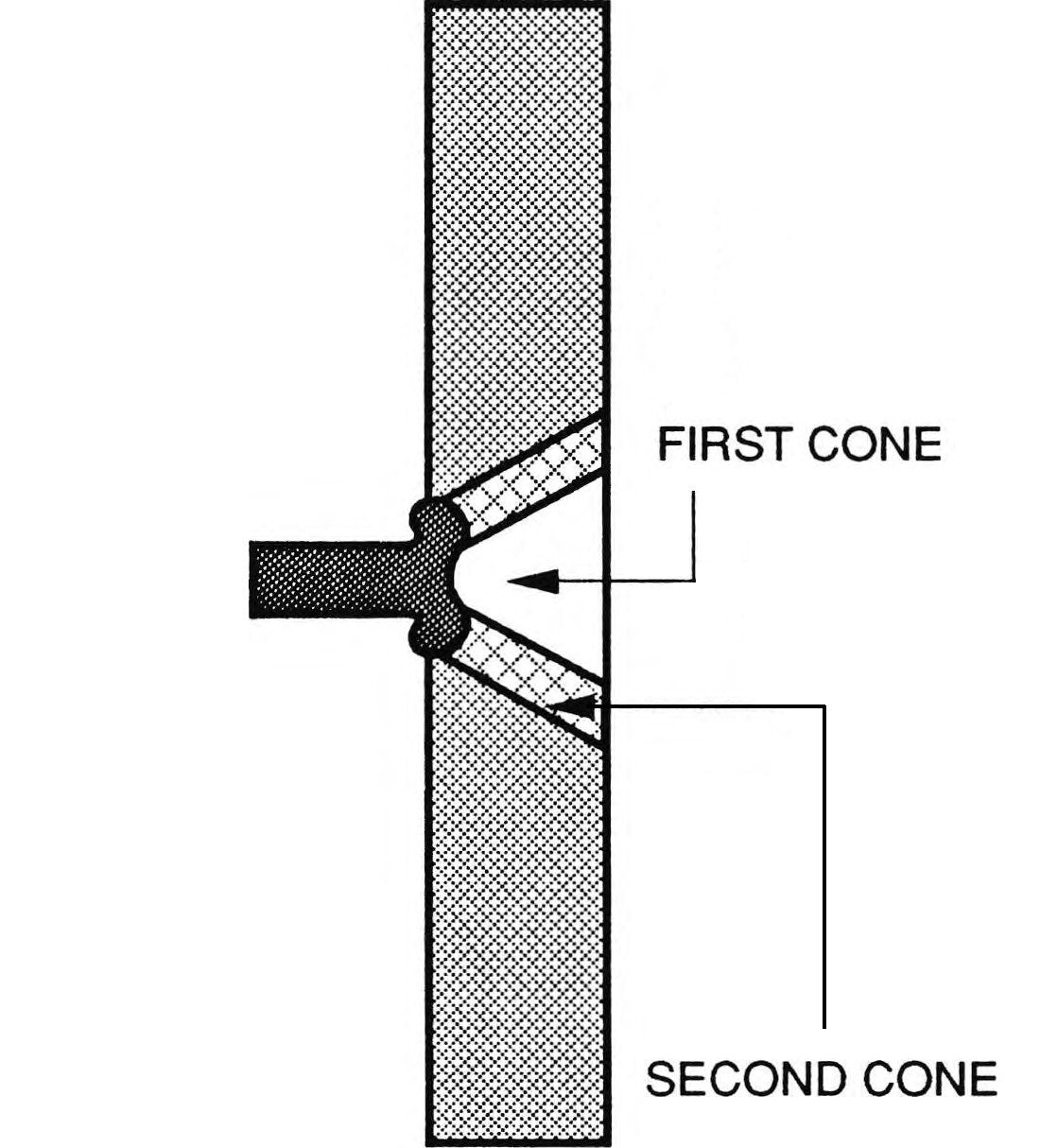
Introducing 'the Second Cone'. Source: A Study of the Ballistic Performance of Lightweight Armours Against Small Arms Ammunition
'Second cones' are made more often than they are found. That's because almost all of them break up immediately after the first cone spalls away. Second cones often crack into the long, curved, jaw shapes we associate with shrapnel.
Jaw shapes like this:
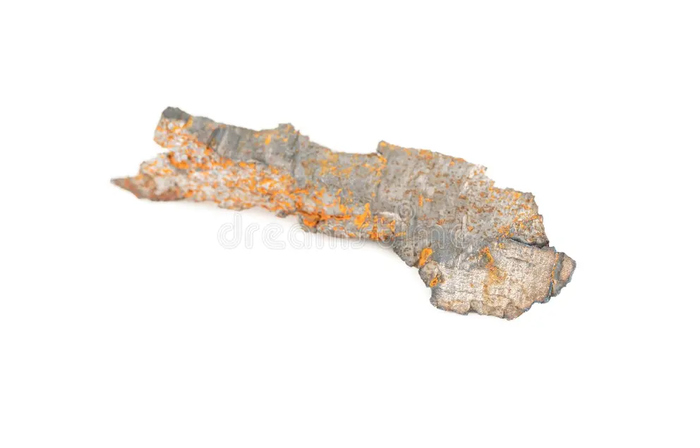
M-21OF rocket shrapnel. Source: Shell fragment isolated - Dreamstime
Curiously, on page 76 of Meteorites; their structure, composition, and terrestrial relations, Oliver Farrington noted meteorite experts had found many jaw-shaped nickel-iron alloys.
Jaw-shaped nickel-iron alloys like this:
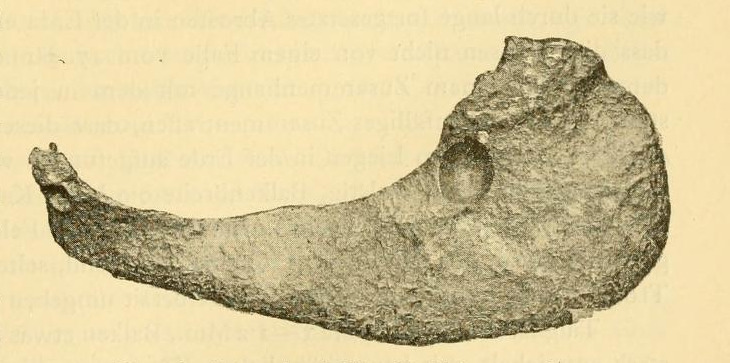
The Kokstad meteorite, South Africa. Source: The Meteorite Collection of the Imperial-Royal Natural History Court Museum on 1 May 1895, p283
And like this:
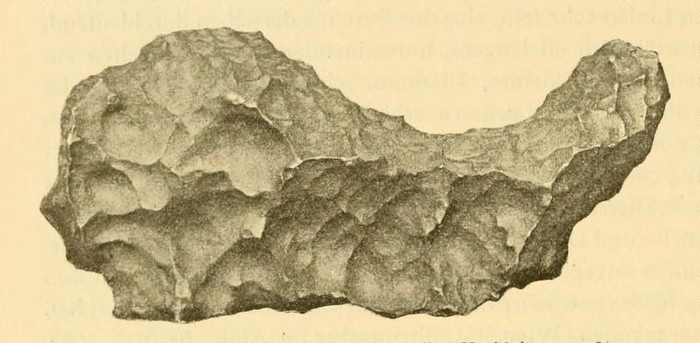
Hex River Mounts meteorite, South Africa. Source: The Meteorite Collection of the Imperial-Royal Natural History Court Museum on 1 May 1895, p292
And just like arms industry experts, meteorite industry experts worked out a long time ago that jaw-shaped nickel-iron alloys are fragments of broken ring-shaped nickel-iron alloys.
From Verhandlungen der Kaiserlich-königliche geologischen Reichsanstalt, Aristes Brezina, Nr. 15, Sitzung am 8. November 1887, p288:
Two other incomparably beautiful irons, of which one is complete and the other nearly complete, represent the final stage of bursting of a ring formation; these are the two South African irons: Kokstad, Griqualand East, found 1884, 43 kilograms heavy, and that of Hex River Mounts, Capland, found 1883, weighing 60 kilograms. Both [Kokstad and Hex River Mounts] allow, according to their form, the definite assumption that they are fragments of burst rings.
Brezina thought Kokstad and the Hex River Mounts meteorites had been part of two separate rings.
He suspected 'the jaw-like Kokstad iron' had once been attached to this nickel-iron alloy pretzel:
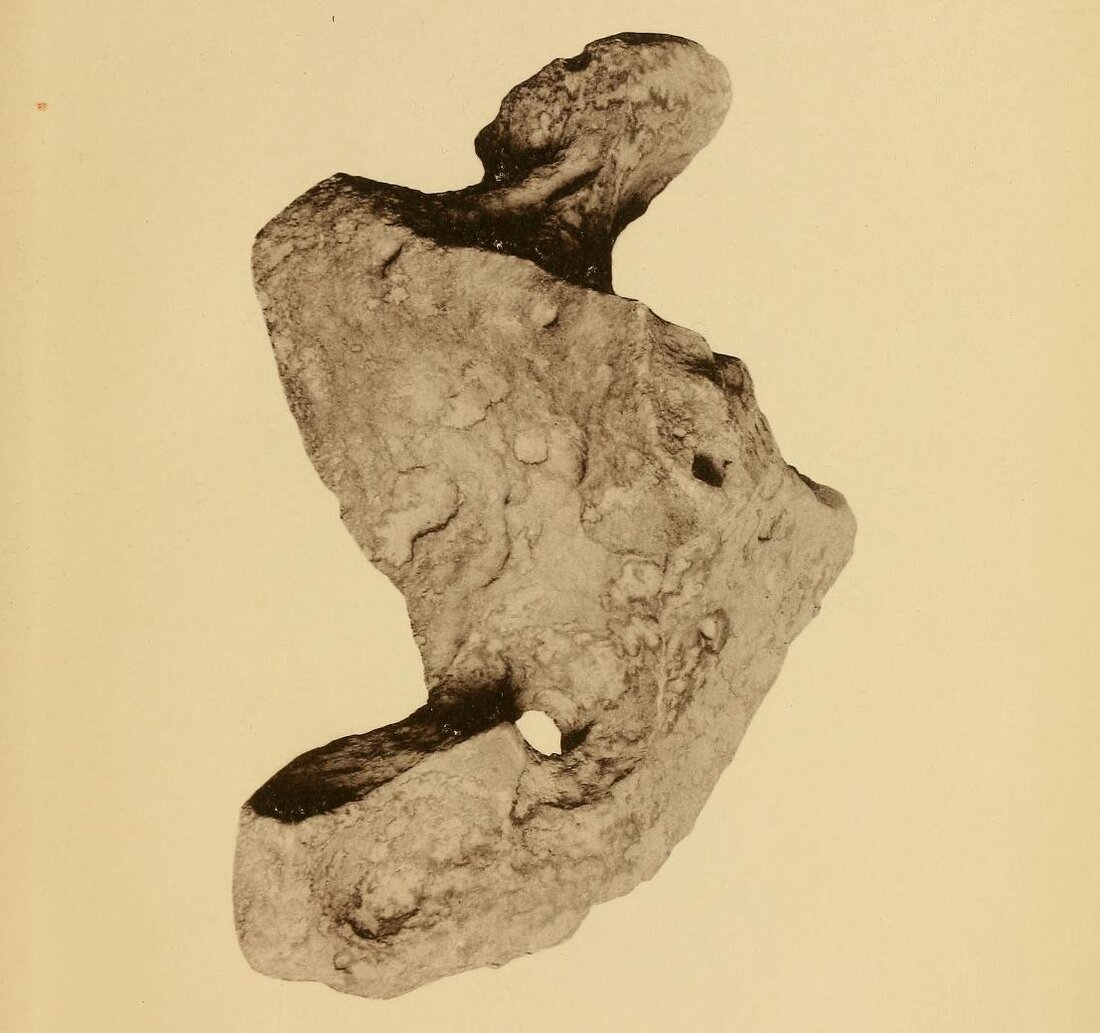
The utterly natural-looking Matatiela Meteorite. Annals of the South African Museum = Annale van die Suid-Afrikaanse Museum, p20
And that when put together they would re-create most of a hefty, ring-shaped meteorite.
Brezina's suspicion sat unconfirmed for 88 years until Vagn Buchwald published more evidence for it in 1975.
While appreciating what the Hex River Mounts and Kokstad meteorites may really have been, pay attention to another characteristic the Kokstad meteorite shares with many other meteorites.
From Handbook of Iron Meteorites: Kokomo – La Caille, Vagn Buchwald, 1975:
It is difficult to understand these structural details, unless we imagine that shock melting occurred and caused a localised heat peak of short duration in the compressible sulfide phase, while only influencing the surroundings to a minor extent.
You don't have to imagine.
You don't have to understand.
You just have to watch the video at the top of the page. and remember the traces of 'shock melting' and 'localised heat peak of short duration' in the scab blasted off HMS New Zealand.
A question worth asking is: did any meteorite experts ask any arms industry experts how so many nickel-iron alloy chunks meteorites might have acquired their signs of 'shock melting' and 'localised heat peaks'?
Or how some nickel-iron alloys might have acquired their exotic shapes?
Or why so many events that dumped nickel-iron alloy chunks across the planet were reported as sounding like aerial warfare?
From Meteorites; their structure, composition, and terrestrial relations, Oliver Cummings Farrington, 1915, p14:
At the fall of Tabory, Perm, Russia, August 30, 1847, a fiery mass appeared in a clear sky... Two or three minutes later, sounds like the firing of many cannon were heard.
And at Sokobanja, Serbia, October 13, 1877:
two explosions like salvos of artillery, accompanied by a brilliant display of light such as attends the bursting of shells... The noise lasted for some time and resembled the firing of musketry.
And at New Concord, Ohio, May 1, 1860:
a strange and terrible report in the heavens... followed by similar reports with such increasing rapidity that after reaching the number of twenty-two they were no longer distinct but became continuous and died away like distant thunder.
Evidence suggests the meteorite industry has long been close to the arms industry. Or - more likely - is itself a public-facing offshoot of a complex of arms, technology, and intelligence industries.
The disappearance of the Tucson meteorites - along with many others - suggests the complex emerged shortly before 1860.
From this time onwards, the disappearance of oddly-shaped and oddly-structured nickel-iron alloy masses coincides with the appearance of new, irrational explanations of 'meteorites'. The pattern of weak narratives suggests public knowledge of meteorites as artefacts and as technological debris was being dismantled.
The pattern of meteorites going missing, and of diminishing imagery and descriptions of meteorites, continues into the early 20th century. After publicly available details of meteorites had been reduced, modern meteorite theory was introduced in around 1931. At that time, the Hoba narrative and the narrative about the origins of mega-craters is promoted to the public as the monopoly meteorite theory.
Documentary evidence that the complex developed military and technological products from found artefacts is, of course, harder to find.
But there are traces.
In 1958 - in the Tucson Meteorites' current home - the Smithsonian's' assistant director for meteorites, John S. Rinehart, was trawling through his employer's exotic dowry and publishing technical reports. Under Air Force Contract AF18(600)-1596.
One of the reasons the public doesn't associate meteorites with scabs, with artillery, with advanced technologies like Composite Ceramic Armour - and one of the reasons the public no longer associates meteorites with artillery fire in the sky - is because publications like Rinehart's Air Force Technical Report No. 8 - Meteorites and Ballistics - weren't apparently intended to develop technical knowledge among the public.
From Studies of Seven Siderites, Edward P Henderson and Stuart H Perry, Proceedings of the United States National Museum, Vol 107, No 3388, 1958, p339:
Some of these observations formed the background study to U. S. National Museum Bulletin 184, by S. H. Perry, published in 1944. After that volume was published, a limited number of albums of photomicrographs on iron meteorites with interpretations were also privately published by S. H. Perry and given a limited distribution.
If read carefully, the rest of that paper offers other clues. But even without, certain key phrases suggest limited sharing of knowledge. Key phrases like:
- 'background study'
- 'limited number'
- 'privately published'
- 'limited distribution'
In addition to limiting - and perhaps privatising - technical knowledge, the re-routing of meteorite science seems to have advanced another, more prosaic, goal:
It's amazing what shows up on farms in Wisconsin. Source: Debris
Outside the hotel room door, carefully printed papers are also presented to the public. These papers are also printed with seemingly important numbers and labels.
Labels like Siderite ('Iron meteorite'), Siderolite ('Stony-Iron meteorite') and Aerolite ('Stony meteorite'):
%%{init: {
      'themeCSS': '
        .pieCircle { opacity: 1 !important; }
        .pieCircle:nth-child(1) { fill: #2563EB !important; }
        .pieCircle:nth-child(2) { fill: #EA580C !important; }
        .legend rect:nth-of-type(1) { fill: #2563EB !important; stroke: #2563EB !important; }
        .legend rect:nth-of-type(2) { fill: #EA580C !important; stroke: #EA580C !important; }
      '
}%%
pie
title Iron Meteorite Composition
    "Nickel-Iron Alloy" : 95
    "Iron Sulfide (AKA Troilite, etc)" : 5
%%{init: {
      'themeCSS': '
        .pieCircle { opacity: 1 !important; }
        .pieCircle:nth-child(1) { fill: #2563EB !important; }
        .pieCircle:nth-child(2) { fill: #EA580C !important; }
        .legend rect:nth-of-type(1) { fill: #2563EB !important; stroke: #2563EB !important; }
        .legend rect:nth-of-type(2) { fill: #EA580C !important; stroke: #EA580C !important; }
      '
}%%
pie
title Stony-Iron Meteorite Composition
"Nickel-Iron Alloy" : 50
"Silicates" : 50
%%{init: {
      'themeCSS': '
        .pieCircle { opacity: 1 !important; }
        .pieCircle:nth-child(1) { fill: #EA580C !important; }
        .pieCircle:nth-child(2) { fill: #2563EB !important; }
        .legend rect:nth-of-type(1) { fill: #2563EB !important; stroke: #2563EB !important; }
        .legend rect:nth-of-type(2) { fill: #EA580C !important; stroke: #EA580C !important; }
      '
}%%
pie
title 'Stony Meteorite (H-group Chondrite) Composition'
"Nickel-Iron Alloy" : 17
"Silicates" : 83
The labels Siderite, Siderolite and Aerolite - all usually translated as 'Iron' or 'Stone' - divert the public from appreciating that most meteorites are either nickel-iron alloy or ceramic composites or nickel-iron alloy variants combined with ceramic composites.
These labels disguise very advanced materials.
Misdirection is presumably why the meteorite industry still uses Farrington's 'lost stone' theory to explain the curiously circular holes found in many nickel-iron alloy meteorites.
Like the curiously circular 70mm diameter hole visible in the Matatiela meteorite above.
And the curiously circular hole in this Canyon Diablo fragment allegedly found in Arizona:
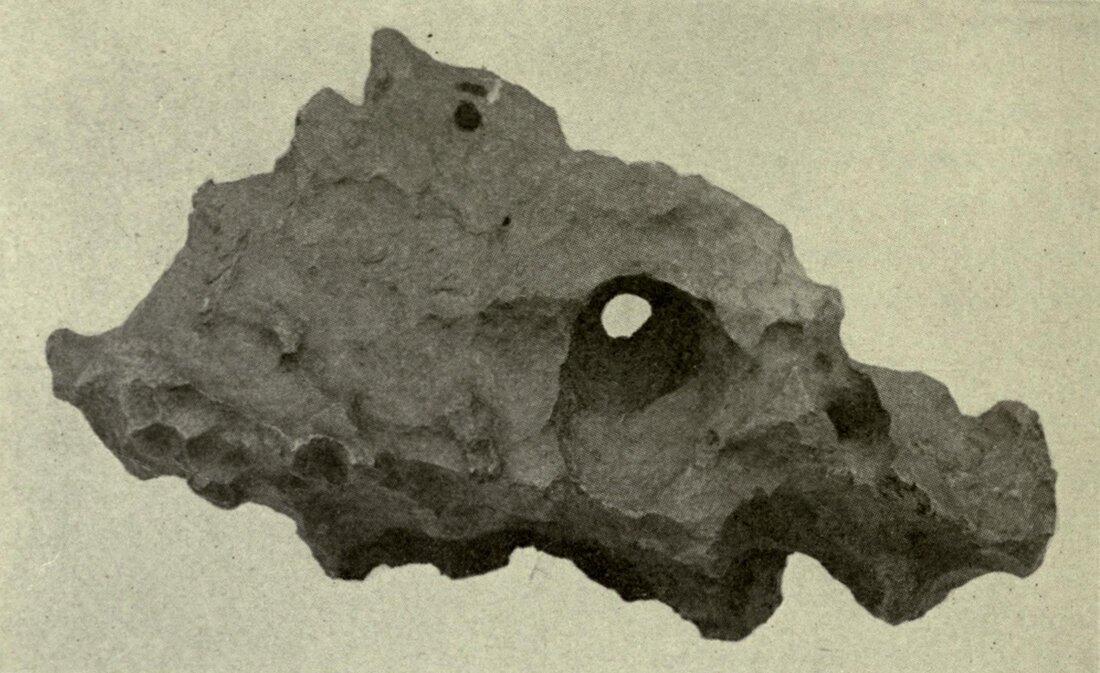
Perforation in Canyon Diablo fragment. Source: Meteorites; their structure, composition, and terrestrial relations
These aren't bullet holes. The Canyon Diablo fragment above is big. At 99.3 kg (219 lbs), it weighs more than most men. These holes are the size of small artillery rounds.
Many meteorites show similar circular holes. Many possess cylindrical holes where some part has disappeared. They support ear-witness claims of hearing artillery in the sky.
Some of these holes may be evidence of how sophisticated technology was sequestered after 1860. Technology that was more sophisticated than armour plate, than composite ceramic armour and the artillery shells design to degrade them.
To help appreciate how advanced the holes seen in meteorites may really be, you have to appreciate that there is more to a tank or a naval ship than armour plate. There are control systems, communication systems and propulsion systems.
And a lot of mechanical and signals processing technology that connects them together.
Turning to a specific example, Haidinger claimed to have included a photograph of Carleton-Tucson in The Carleton-Tucson and Ainsa-Tucson Meteorite Masses. But no obvious photograph of it survived into the digital version.
If the history of the the Carleton-Tucson meteorite doesn't tell you it was a very, very interesting chunk of exotic nickel-iron alloy, perhaps the intense examination it underwent in multiple laboratories will.
Laboratory descriptions of its interior describe curved strands of olivine meeting at nodes. And of thin strips of other elements weaving through its nickel-iron alloy substrate. These descriptions go beyond hints that Carleton-Tucson was artificial. They hint at very specific, very advanced technologies. They bring to mind the micro-management of light and magnetic flux. In the same way a printed circuit board brings to mind the micro-management of electricity.
For a summary of Carleton-Tucson's lab results, try pages 460 to 467 in Farrington's 1915 work: Catalogue of the Meteorites of North America.
Alternatively, look at the attention to detail given to the olivine structures in, say, the Brenham meteorite group, found in Kansas. The three tables on page 79 of Catalogue of the Meteorites of North America do not illustrate geeky fascination. They illustrate technical details being examined with forensic attention to detail.
Or note the chemical analysis labelled "2. Graphite" on page 137 of Farrington's report on the Cosby Creek, meteorite found in Tennessee. There is nothing natural about a composite of graphite infused with pure iron. And nothing casual about the lab's analysis of it:
Graphite = carbon. Corroded carbon fibre = carbon. Source: Inside Dyson’s Overengineered £1000 Hand Dryer
And also note how the Cosby Creek nickel-iron alloy was found in curious circumstances.
From Catalogue of the Meteorites of North America, p137:
many individuals examined it in place. It was entirely insulated on the surface of the ground
"Entirely insulated on the surface of the ground"?
Insulated by what?
You don't need laboratory equipment to tell you that a meteorite "insulated on the ground" is a very peculiar meteorite:
Though it helps. Source: Debris
With that video clip in mind, Mexico's Coahuila meteorite group also demonstrates how the more complex the structure of a meteorite, the more likely the meteorite disappeared into a lab - dragging behind it any find-site photographs.
For example, try to find imagery of these.
From A New Meteorite from Coahuila, Mexico: Nativitas Tlaxcala, HH Ninninger, p3:
many of the component plates were separating and falling away. Several hundred grams, among which were some very beautiful plates, were obtained when cleaning off the main mass for preservation.
The straight edges of these plates were separated by the usual thin, glistening plates of Taenite which in this meteorite appear unusually thin. These thin elastic sheets of Taenite had in some cases been loosened by oxidation in the disintegrated outer crust referred to above.
And from the fragments which had been preserved I was able to pick out a number of good-sized samples which were used for a careful study of this interesting component of iron meteorites.
Thin sheets of 'iron' separated by thin insulation are a common component in human-made artefacts:
Though human-made stators are less advanced. Source: Inside Dyson’s Overengineered £1000 Hand Dryer
From A New Meteorite from Coahuila, Mexico: Nativitas Tlaxcala, p3:
The thin elastic sheets are of a brassy lustre, quite flexible, and possess sufficient elasticity so that they may be rolled into a cylinder and when released return to their original form. It is quite difficult to break them by bending unless the included angle is reduced to zero. They also possess great tensil strength. By measuring nineteen of them their thickness was determined to average .034 mm. ranging from .02 mm. to .08 mm.
If that isn't convincing enough, try this. This is the Coahuila Iron as presented to the public today:

Boring. Source: Coahuila meteorite - Wikipedia
So try to find exhibits - or even imagery - of its exotic parts.
From Neue Meteoriten des Kaiserlich-königliche naturhistorischen Hofmuseums, Verhandlungen der Kaiserlich-königliche Geologischen Reichsanstalt Kaiserlich-königliche Geologische Reichsanstalt, Aristedes Brezina, 1867, p288:
it also had two curious iron cylinders as inclusions in the remaining iron.
Those two iron cylinders do sound curious. They sound curious enough to have been photographed.
Or even to display in a museum.
Coahuila's missing cylinders aren't the only missing 'iron' cylinders found on the hills of the US and Mexico.
From Memoir on Meteorites, J Lawrence Smith, April, 1854, p8:
Dr. Berlandier, writes in his journal of the commission of limits that at the Hacienda of Venagas there was (1827) a piece of iron that would make a cylinder one yard in length with a diameter of ten inches. It was said to have been brought from the mountains near the Hacienda.
That's three missing iron cylinders. Any more?
Yes. Aristides Brezina hinted where the public might still find a cylinder similar to the cylinders discovered in the Coahuila Iron.
From Neue Meteoriten des Kaiserlich-königliche naturhistorischen Hofmuseums, Verhandlungen der Kaiserlich-königliche Geologischen Reichsanstalt Kaiserlich-königliche Geologische Reichsanstalt, Aristedes Brezina, 1867, p288:
the magnificent iron of Babbs Mill in the form of a flat-pressed cigar, a former inclusion in a huge iron block (analogous to the small iron cylinders in Coahuila iron)
Even so, you will not easily find good photographs of the Babb's Mill artefact:
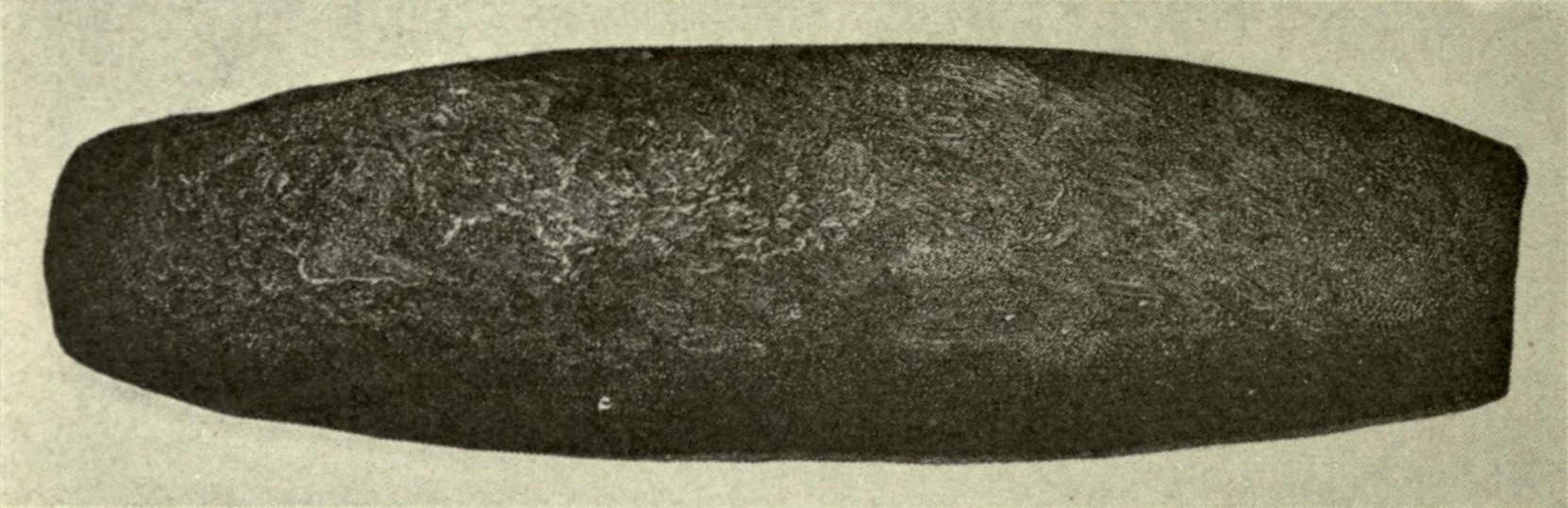
Artefact retrieved in 1876 at Babb's Mill, Tennessee. Source: Meteorites; their structure, composition, and terrestrial relations, p74
and:
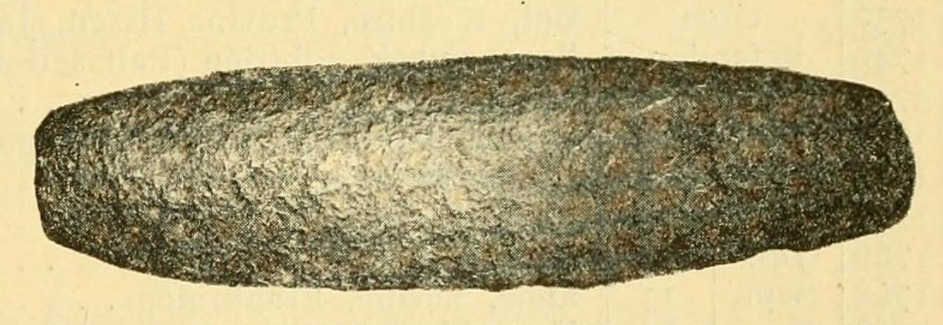
Other side of Babb's Mill artefact. Source: Annalen des Naturhistorischen Museums in Wien Naturhistorisches Museum, p297
Both its end parts appear to have been removed by the time these photographs were taken.
Oliver Farrington suggested this artefact was probably just one of the stones so often missing from meteorites. Some part that had fallen free of the cylindrical holes seen in many nickel-iron alloy meteorites.
But you can confirm for yourself whether the Babb's Mill meteorite is a stone or a technological artefact. Just read the descriptions that managed to escape its various lab tests:
- Catalogue of the meteorites of North America, to January 1, 1909, pp 41-44
- Annalen des Naturhistorischen Museums in Wien Naturhistorisches Museum, p297 (you'll need German)
Or you can simply let the technologists - those keepers of artefacts - laugh at you.
As they do with their explanation of how the Babb's Mill artefact became a cylinder:
From Meteorites; their structure, composition, and terrestrial relations, p74:
[Blake, who originally found it, thought] this meteorite was a residual nodule of an irregularly shaped mass from which the irregular portions had been thrown off by terrestrial weathering, but it seems quite as likely that the form was acquired in falling.
That's right. To explain the Babb's Mill meteorite's bizarre cylindrical shape, Farrington bequeathed the public with a third version of air-resistance theory.
Air-sanding.
It's funny.
It's stupid.
And it distracts you from noticing missing meteorites, missing parts of meteorites and missing descriptions of sequestrated technologies meteorites.
© All rights reserved. The original author/creator of each image, video, quote or text retains full ownership and rights.
-
Summary of key Tucson meteorite dates: ~1660s: alleged time of fall. 1735: Earliest documented visit to the discovery site by Juan Baptista Ainsa. 1852: First formal written description by J.R. Bartlett. 1857–1863: Transition from local Tucson possession to institutional collections (Smithsonian). ↩
 More of this investigation:
Desert Forensics,
More of this investigation:
The Reformation Was a Reformatting,
More of this investigation:
Misunderstood Technology
More of this investigation:
Desert Forensics,
More of this investigation:
The Reformation Was a Reformatting,
More of this investigation:
Misunderstood Technology